
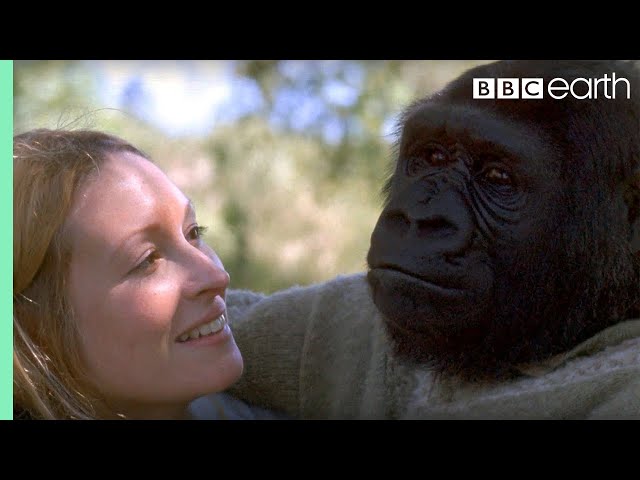
Did You Know There’s a Talking Gorilla? The Fascinating Story of Koko and Other Language-Learning Apes
Introduction
For centuries, humans have wondered if animals could ever truly communicate with us in our own language. While parrots can mimic speech and dogs understand commands, one extraordinary gorilla named Koko broke barriers by mastering American Sign Language (ASL) and forming emotional connections with humans. Her story, along with other language-learning apes, challenges our understanding of animal intelligence.
In this 3,000-word exploration, we’ll cover:
Koko’s Early Life and Training
Her Remarkable Language Abilities
Famous Moments: From Kittens to Robin Williams
Scientific Debate: Did She Really Understand Language?
Other Talking Apes (Washoe, Nim Chimpsky, Kanzi)
Ethical Questions: Should Animals Be Taught Human Language?
Legacy: What Koko Taught Us About Animal Minds
1. Koko’s Early Life and Training
Koko, a western lowland gorilla, was born on July 4, 1971, at the San Francisco Zoo. Psychologist Francine "Penny" Patterson began working with her when she was just a year old, originally as part of a Stanford University project on interspecies communication.
How Koko Learned Sign Language
Patterson used ASL (American Sign Language) because gorillas lack human vocal cords but have dexterous hands.
Training involved repetition, rewards, and immersive interaction—similar to how human children learn language.
By age 5, Koko knew over 200 signs, eventually expanding to 1,000+.
2. Her Remarkable Language Abilities
Koko didn’t just mimic signs—she combined words, expressed emotions, and even joked.
Key Milestones:
Vocabulary: Understood ~2,000 English words and actively used 1,000+ signs.
Self-Awareness: Recognized herself in a mirror (a sign of higher intelligence).
Creativity: Invented new signs, like:
"Finger bracelet" → "Ring"
"White tiger" → Describing a zebra
Emotional Depth: Expressed grief, love, and humor.
Example Conversations:
When asked, "What do you do with food you don’t like?", Koko signed: "Good gorilla spit." (She’d pretend to eat it, then spit it out!)
She once blamed her pet kitten for ripping a sink out of the wall—showing deception, a complex cognitive skill.
3. Famous Moments: From Kittens to Robin Williams
Koko’s life was filled with touching and humorous interactions.
Koko and Her Kittens
She begged for a cat, and in 1984, researchers gave her a tailless Manx kitten named All Ball.
Koko cared for it like a baby, signing "Soft good cat".
Tragically, All Ball died after being hit by a car. Koko grieved deeply, signing "Bad, sad, cry" when told.
Meeting Robin Williams (2001)
Koko loved comedians and immediately bonded with Williams, laughing and playing with him.
After his death in 2014, when shown his photo, she signed "Cry, woman, sad".
4. Scientific Debate: Did She Really Understand Language?
While Koko’s abilities were groundbreaking, skeptics questioned:
Arguments For:
She combined signs creatively (not just mimicking).
Showed self-awareness, humor, and deception—traits linked to true language comprehension.
Arguments Against:
Clever Hans Effect: Some claimed she responded to unconscious cues from trainers.
Limited Syntax: She didn’t form complex sentences like humans.
Most experts agree she understood meaning but didn’t use grammar like humans.
5. Other Talking Apes
Koko wasn’t alone—other primates also learned human communication.
| Name | Species | Language Learned | Key Achievement |
|---|---|---|---|
| Washoe | Chimpanzee | ASL | First non-human to learn sign language (250+ signs) |
| Nim Chimpsky | Chimpanzee | ASL | Studied to see if he could form sentences (controversial results) |
| Kanzi | Bonobo | Lexigrams (symbol board) | Understands spoken English, makes tools, starts fires |
6. Ethical Questions: Should Animals Be Taught Human Language?
While fascinating, this research raises concerns:
Is it fair to keep intelligent apes in captivity?
Do they truly benefit, or is it just for human curiosity?
Should they have rights similar to humans?
7. Legacy: What Koko Taught Us About Animal Minds
Koko’s life proved that gorillas (and likely other great apes) have:
✅ Complex emotions (love, grief, humor)
✅ Self-awareness
✅ Problem-solving skills
Her story reshapes how we see animal intelligence and empathy.
Conclusion
Koko wasn’t just a "talking gorilla"—she was a bridge between species, showing that the line between human and animal minds is thinner than we thought. While debates continue, her legacy lives on, inspiring new research on animal cognition and ethical treatment.
Do you think another gorilla like Koko will emerge in the future? Or was she one-of-a-kind? 🦍💬



.jpg)


